
Back-to-school car accidents in Buffalo become a greater concern in late August as familiar routes begin to change. School buses return to neighborhood streets, families test new commutes, student-athletes attend practices, teen drivers learn unfamiliar routes, and pickup lines form near campuses. These changes add sudden stops, turning vehicles, pedestrians, bicyclists, and congestion to roads that may have felt quieter during July.
You can reduce your risk by leaving earlier, slowing down before school zones, putting your phone away, increasing your following distance, and expecting children to move unpredictably near crosswalks, bus stops, parking lots, and parked vehicles. If a crash occurs, protect your health first, document the scene, identify available video, notify the correct insurer, and seek legal guidance before evidence or filing deadlines are lost.









Late August Changes Buffalo Driving Risks Before School Opens 
Late August changes Buffalo driving risks even before every school begins its full class schedule. Orientations, athletic practices, staff meetings, supply drop-offs, transportation rehearsals, and registration events can bring school-related traffic back at different times and on different days.
A route that felt predictable during summer may suddenly include a bus making frequent stops, a line of vehicles waiting to enter a parking lot, or a crossing guard stopping traffic. Western New York roads may also carry construction vehicles, commuters, visitors, bicyclists, and pedestrians. When these road users overlap with returning school traffic, you have less time and space to react to a rushed turn or unexpected stop.
Morning and afternoon changes can catch drivers by surprise. A bus route may begin before classes start. A school entrance may use a temporary traffic pattern. A family may stop near a curb while learning a new drop-off routine. You should expect these changes throughout late August rather than waiting for the first full week of school.
Slow Down Before School Traffic Becomes Crowded. A Few Extra Minutes Can Prevent a Sudden Decision Near a Child, Bus, or Crosswalk.
Common Back-to-School Car Accident Patterns
Back-to-school car accident patterns often involve familiar driving mistakes in a setting with more vehicles and more vulnerable road users. Common examples include:
- Rear-end collisions when a driver does not expect a bus, crossing guard, or pickup line to stop traffic
- Left-turn crashes near school entrances, parking lots, and busy intersections
- Sideswipe accidents when drivers merge around parked or waiting vehicles
- Parking lot collisions caused by backing, limited visibility, or hurried drop-offs
- Pedestrian accidents at crosswalks, bus stops, school entrances, and neighborhood corners
- Bicycle accidents involving students riding near parked cars or turning vehicles
- School bus collisions involving another driver, a bus operator, a vehicle owner, or a transportation contractor
A low-speed crash can still cause injuries. Neck pain, back pain, headaches, dizziness, shoulder pain, and joint symptoms may not become clear until the initial stress response fades. You should seek prompt medical attention when you have pain, confusion, restricted movement, numbness, weakness, or other symptoms after a collision.
Partner Partner Partner Attorney Attorney Attorney
Benjamin J.
Andrews
Robert
Maranto
Tom
Kotrys
Robert J.
Maranto, III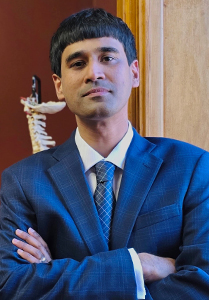
Thanon
Rezvi

Rea Marcelo
Roxas
School Buses Require More Space and Patience
School buses require more space and patience because they have larger blind spots, need more room to maneuver, take longer to stop than passenger vehicles, and make frequent stops. Following too closely can leave you without enough distance to respond when the bus slows or activates its warning lights.
The New York State Department of Motor Vehicles states that drivers approaching a stopped school bus from either direction must stop when its red lights are flashing. This rule applies on two-lane roads, multi-lane highways, and divided highways. The DMV instructs drivers to stop at least 20 feet from the bus and remain stopped until the bus resumes motion or a bus driver or police officer signals that traffic may proceed.
Yellow flashing lights mean that the school bus is preparing to stop. Reduce your speed, prepare to stop, scan both sides of the road, and look for children who may be hidden by the bus, parked vehicles, shrubs, or other obstructions.
New York school bus safety guidance:
https://dmv.ny.gov/more-info/school-bus-safety
The team is very personable, patient and empathetic with their clients. They are upfront with you and will explain the entire process with you, they never lead you to believe otherwise, they tell you like it is and will not sell you a million dollar dream. Trust in Andrews, Bernstein & Maranto, PLLC, they work for you and he looks out for your best interest.” - Jane D.
Pickup Lines and Parking Lots Create Different Hazards
Pickup lines and parking lots create different hazards because drivers, buses, children, school employees, and parked vehicles share a confined area. You may be focused on finding the correct entrance or locating a child, but you still need to check mirrors, blind spots, crosswalks, and the space around your vehicle.
Use these safety habits in school pickup areas:
- Follow the school traffic plan instead of stopping in an unapproved location
- Keep crosswalks, fire lanes, loading areas, and bus zones clear
- Do not double-park or allow a child to exit into moving traffic
- Check behind your vehicle before backing and continue checking while moving
- Put your phone away before entering the pickup area
- Leave enough room for buses, emergency vehicles, and other drivers to maneuver
- Wait until children are safely away from your vehicle before moving
Children may misjudge a vehicle’s speed or distance. A child may step between parked cars, turn back for a dropped item, follow another student into the road, or move outside a driver’s field of view. You should drive slowly enough to stop when one of these actions occurs.
Teen Drivers Face New Routes and Distractions
Teen drivers face new routes and distractions during late August. A student may be driving earlier in the morning, carrying passengers, following directions, searching for parking, or entering a crowded school property for the first time.
Parents can help by practicing the route during the hours when the teen will travel. The practice drive should include school-zone speed changes, bus stops, difficult left turns, crosswalks, parking areas, and a backup route for congestion. Household rules should also address phone use, passenger distractions, seat belts, and departure times.
A teen driver is not automatically responsible for a collision because of age. Responsibility depends on the conduct of each person involved. Speed, following distance, distraction, right of way, traffic signals, visibility, vehicle condition, and the actions of pedestrians or bicyclists may all affect a liability investigation.
Should I Take The First Settlement Offer? Steps to File a Personal Injury ClaimRelated Videos
What to Do After a Back-to-School Car Accident
What you do after a back-to-school car accident can protect your health and preserve evidence. Call 911 when anyone may be injured, traffic is blocked, a vehicle cannot be moved safely, or the crash involves a pedestrian, bicyclist, child, or school bus.
When the circumstances permit, take these steps:
- Photograph vehicle positions, damage, lane markings, signs, crosswalks, bus stops, debris, and visible injuries
- Record the exact location, date, and time
- Exchange driver, vehicle, registration, and insurance information
- Obtain names and contact information for witnesses, crossing guards, school employees, bus personnel, and nearby parents
- Identify cameras on buses, school buildings, homes, businesses, traffic signals, and other vehicles
- Seek medical evaluation and follow the treatment instructions you receive
- Save damaged child safety seats, bicycles, helmets, clothing, backpacks, and personal property
- Keep medical bills, repair estimates, school absence records, wage-loss documents, and insurer correspondence
- Avoid posting blame, photographs, or medical details on social media
- Ask for the police report number and review the report when it becomes available
The firm’s guide to the first steps after a car accident provides more information:
https://www.wnyinjurylawyers.com/first-things-to-do-after-an-auto-accident/
New York No-Fault Insurance Deadlines Can Begin Immediately
New York no-fault insurance deadlines can begin immediately after a motor vehicle crash. No-fault coverage may pay qualifying medical expenses, part of lost earnings, and certain necessary expenses without waiting for a final decision about fault. The correct insurer may depend on whether you were a driver, passenger, pedestrian, or another eligible injured person.
The New York State Department of Financial Services states that written notice of a no-fault claim generally must be submitted within 30 days after the accident. Medical bills generally must be submitted within 45 days, and lost-earnings claims generally must be submitted within 90 days. Exceptions may apply when clear and reasonable justification supports a late submission.
Do not assume that a police report starts every insurance claim. Ask which insurer should receive the application, keep copies of each document, and track when and how the materials were delivered.
New York no-fault insurance guidance:
https://www.dfs.ny.gov/consumers/auto_insurance/nofault_faqs
The firm’s resource about medical bills and New York no-fault coverage is available here:
https://www.wnyinjurylawyers.com/medical-bills-covered-fault-injured-auto-accident-new-york/
Verdicts & Settlements
Who May Be Responsible for a School-Related Crash
Responsibility for a school-related crash depends on how the collision happened and who controlled the vehicle, property, or unsafe condition. A claim may involve:
- A private driver or teen driver
- A vehicle owner
- A school bus operator
- A transportation company
- An employer whose worker was driving
- A delivery company
- A rideshare driver
- A contractor
- A school district, municipality, or other public entity
- More than one responsible party
Claims involving a public school, municipality, or government vehicle may require a notice of claim within 90 days when New York General Municipal Law Section 50-e applies. Other rules and exceptions may affect the deadline, so you should seek legal guidance promptly when a public entity may be involved.
New York General Municipal Law Section 50-e:
https://www.nysenate.gov/legislation/laws/GMU/50-E
Video and electronic evidence may disappear before a lawsuit deadline. Bus footage, school surveillance, nearby business recordings, dash-camera files, and vehicle data may be overwritten or deleted unless a preservation request is sent promptly.
Insurance companies may dispute fault, the cause of an injury, the need for treatment, or the share of responsibility assigned to each person. Photographs, witness accounts, medical records, electronic data, and a detailed timeline can help address those disputes.
How a Buffalo Car Accident Lawyer Can Help
A Buffalo car accident lawyer can investigate the scene, request available video, interview witnesses, review vehicle ownership, examine insurance policies, communicate with insurers, and identify parties who may share responsibility. Legal counsel can also help document medical treatment, lost income, school absences, transportation costs, and other effects of the collision.
You can learn more about car accident claims and the firm’s approach here:
https://www.wnyinjurylawyers.com/buffalo-car-accident-lawyers/
Discuss Your Back-to-School Crash With a Buffalo Injury Lawyer
A back-to-school crash can disrupt medical care, work, transportation, and a child’s return to class at the same time. Andrews, Bernstein & Maranto, PLLC serves injured drivers, passengers, pedestrians, bicyclists, and families in Buffalo, Erie County, Western New York, and nearby areas from its office at 420 Franklin Street in Buffalo.
To discuss the facts of a collision and the options that may apply, call (716) 333-5525 or use the firm’s contact page:
https://www.wnyinjurylawyers.com/contact-us/
This article is for general informational purposes and does not provide legal advice. Every case is different. Speak with an attorney about your specific circumstances.