
Fall slip and fall injuries in Buffalo can happen before winter is fully underway. Wet leaves may reduce traction or hide uneven pavement, while frost, refrozen runoff, and early ice can make sidewalks, entrances, stairs, and parking areas hazardous. Liability depends on the facts. In a New York premises liability case, evidence may need to show that the responsible party created the dangerous condition or had actual or constructive notice of it and that the condition caused your injuries.
Because leaves can be removed, ice can melt, water can dry, and surveillance footage can be overwritten, preserving evidence soon after a fall can be important. Andrews, Bernstein & Maranto, PLLC helps injured people in Buffalo and Western New York evaluate property conditions, identify responsible parties, preserve evidence, and understand filing deadlines.
Learn more about Buffalo slip and fall claims:
https://www.wnyinjurylawyers.com/buffalo-slip-and-fall-injury-attorneys/











Why Fall Creates Different Slip and Fall Hazards in Buffalo 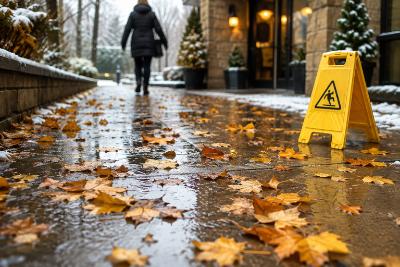
Fall weather can create changing walking conditions across Buffalo and Western New York. Rain can soak fallen leaves. Overnight cooling can turn runoff or standing water into ice. Shorter daylight hours can also make surface defects harder to see around sidewalks, stairs, parking areas, and building entrances.
A fall does not establish liability by itself. The legal analysis usually focuses on the condition that caused the fall, who owned or controlled the area, whether that party created the condition, whether the party knew or should have known about it, and whether there was a reasonable opportunity to address it.
A Fall Hazard Can Change Quickly. The evidence available shortly after an accident may be much stronger than what remains days later.
Wet Leaves Can Hide or Create Walking Hazards
Wet leaves can become slick on concrete, brick, stone, ramps, stairs, and sloped walkways. A pile of leaves can also hide a crack, raised sidewalk slab, pothole, curb edge, loose paver, or other change in elevation.
Whether wet leaves support a premises liability claim depends on the evidence. A fresh scattering of leaves presents different facts from a saturated accumulation that remained on a frequently used walkway. Useful evidence may include photographs, surveillance footage, inspection records, cleanup schedules, witness statements, prior complaints, and testimony about when employees or property managers last inspected the area.
New York law recognizes actual and constructive notice. Actual notice may be shown when the responsible party was aware of the specific dangerous condition. Constructive notice generally requires evidence that the condition was visible and apparent and existed long enough before the accident for the responsible party to discover and remedy it.
Learn more about evidence used to establish fault:
https://www.wnyinjurylawyers.com/proving-fault-in-a-slip-and-fall-accident/
Partner Partner Partner Attorney Attorney Attorney
Benjamin J.
Andrews
Robert
Maranto
Tom
Kotrys
Robert J.
Maranto, III
Thanon
Rezvi

Rea Marcelo
Roxas
Early Ice Can Be Difficult to See and Difficult to Document Later
Early ice may look like an ordinary wet surface. It can form from precipitation, roof runoff, drainage problems, leaking water, melting frost, or water that pools and refreezes as temperatures drop.
The source of the ice can affect the legal analysis. Evidence of recurring drainage, repeated pooling, prior complaints, repair requests, or earlier icing may help show whether a property owner or manager had notice of a recurring condition. Photographs showing downspouts, drains, slopes, depressions, or the surrounding walking surface can also help explain how water reached the area.
Snow and ice cases can also involve New York’s storm-in-progress doctrine. A property owner generally does not have a duty to remove snow or ice while a qualifying storm is in progress or until a reasonable period has passed after the storm ends. The facts may be different when the condition existed before the storm or when snow or ice removal work created or worsened the hazard.
For more information about sidewalk snow and ice issues:
https://www.wnyinjurylawyers.com/unshoveled-sidewalk-injury/
Dangerous Walkways Are Not Limited to Ice and Leaves
Fall conditions can combine with existing property defects. You might slip on wet leaves and encounter a broken section of pavement underneath. You might lose your footing on ice near a loose mat, damaged stair, poorly drained entrance, or uneven walking surface.
Common fall walkway hazards can include:
- Wet leaves covering cracks, holes, curbs, or changes in elevation
- Frost or thin ice on shaded sidewalks, ramps, and exterior stairs
- Water tracked into store, office, or apartment entrances
- Standing water near clogged or poorly functioning drains
- Broken concrete, loose pavers, potholes, or uneven asphalt
- Worn, loose, or bunched entrance mats
- Poor lighting near steps, ramps, sidewalks, and parking areas
Photographs taken from several angles can help document the surface, lighting, drainage, warning signs, nearby cameras, and the route you were using.
The team is very personable, patient and empathetic with their clients. They are upfront with you and will explain the entire process with you, they never lead you to believe otherwise, they tell you like it is and will not sell you a million dollar dream. Trust in Andrews, Bernstein & Maranto, PLLC, they work for you and he looks out for your best interest.” - Jane D.
What to Do After a Slip and Fall in Buffalo
Your health should come first. Seek medical attention when you are injured, especially after a head impact, severe pain, swelling, numbness, dizziness, or difficulty standing or walking.
If you can do so safely, preserve information about the scene before conditions change:
- Photograph the exact spot where you fell and the surrounding area.
- Take pictures of leaves, ice, water, cracks, stairs, mats, drains, lighting, and warning signs.
- Photograph your shoes and clothing if they show water, debris, or other evidence.
- Report the incident to the property owner, manager, landlord, business, or appropriate public entity.
- Ask whether an incident report was created and request a copy or report number when available.
- Get the names and contact information of witnesses.
- Write down the date, time, weather, lighting, and what you noticed immediately before and after the fall.
- Preserve the shoes and clothing you were wearing.
- Keep medical records, receipts, wage-loss information, and insurance correspondence.
- Identify nearby surveillance cameras as soon as possible.
Leaves can be removed within a short period. Ice can melt. Water can be cleaned. Video systems may overwrite older footage. Early documentation can help preserve facts that would otherwise disappear.
Review more steps to protect a potential claim:
https://www.wnyinjurylawyers.com/mistakes-to-avoid-after-a-slip-and-fall-injury/
Should I Take The First Settlement Offer? Steps to File a Personal Injury ClaimRelated Videos
What If You Were Partly at Fault for the Fall?
A property owner or insurer may argue that you should have seen the condition, that you were distracted, or that your footwear contributed to the accident. Those arguments do not automatically defeat a typical New York premises liability claim.
New York’s comparative fault rule generally allows damages in a premises liability case to be reduced according to the injured person’s share of responsibility. The specific facts still matter. Lighting, warnings, visibility, the route available to pedestrians, whether the danger was concealed, and what the responsible party knew or should have known can all affect the analysis.
Special Rules May Apply to Buffalo Sidewalks and Other Public Property
A fall on a City of Buffalo sidewalk or other public property can involve rules and deadlines that differ from a claim involving private property.
Section 21-2 of the Charter of the City of Buffalo contains a prior written notice requirement for certain claims involving defective, unsafe, dangerous, obstructed, snowy, or icy streets and sidewalks. New York courts recognize limited exceptions to municipal prior written notice requirements, including situations involving a municipality’s affirmative creation of the defect through negligence or a qualifying special use.
Claims against public entities may also require a Notice of Claim. New York General Municipal Law Section 50-e generally requires a Notice of Claim within 90 days for covered tort claims against public corporations. General Municipal Law Section 50-i also imposes a shorter limitations period for certain actions against cities, counties, towns, villages, fire districts, and school districts.
For many negligence-based personal injury actions against private parties, New York Civil Practice Law and Rules Section 214 provides a three-year limitations period. Exceptions can apply, and claims involving public entities can have much shorter deadlines. Prompt legal review can help identify the correct deadline for your situation.
Verdicts & Settlements
How a Buffalo Slip and Fall Lawyer Can Help
Slip and fall cases involving wet leaves, early ice, or unsafe walkways often depend on evidence that is outside your immediate control. A lawyer can investigate who owned, occupied, managed, or maintained the property and determine which parties may have had responsibility for the area.
An investigation may include:
- Requesting surveillance footage
- Reviewing inspection and maintenance records
- Examining cleaning, landscaping, or snow-removal contracts
- Identifying prior complaints or repair requests
- Reviewing photographs and witness statements
- Examining drainage, lighting, and walkway conditions
- Determining whether a municipality or contractor may be involved
- Identifying applicable insurance coverage
- Reviewing notice requirements and filing deadlines
The goal is to connect the condition that caused your fall with reliable evidence about how it developed, how long it existed, who was responsible for the area, and what happened after the accident.
Talk With a Buffalo Slip and Fall Lawyer
If you were injured in a fall involving wet leaves, early ice, an unsafe sidewalk, an entrance, stairs, a parking area, or another walking surface, Andrews, Bernstein & Maranto, PLLC can review the circumstances and explain your legal options.
The Buffalo office is located at 420 Franklin Street, Buffalo, NY 14202. The firm serves injured people in Buffalo, Erie County, Western New York, and nearby areas.
Call (716) 333-5525 for a free consultation.
tel:+17163335525
Contact the firm online:
https://www.wnyinjurylawyers.com/contact-us/
This article is for general informational purposes only and does not constitute legal advice. Every case depends on its specific facts and applicable law. Consult an attorney about your situation.