
Each year, drivers face the unpredictable and dangerous threat of black ice, particularly during the early season. When freezing temperatures hit unexpectedly, roads can flash-freeze overnight, creating hazardous driving conditions that are hard to detect. Black ice is especially dangerous because it often appears without warning and forms a thin, nearly invisible layer on the road. Drivers may not notice it until it’s too late, leading to sudden loss of control and serious accidents.
Black ice forms when moisture on the road freezes quickly, typically in areas where sunlight is limited or the temperature drops rapidly overnight. The cold weather in the early morning hours often causes the road to be frozen, sometimes before most people even begin their daily commutes. It is during these moments that the risk of accidents rises significantly.









How Black Ice Causes Accidents 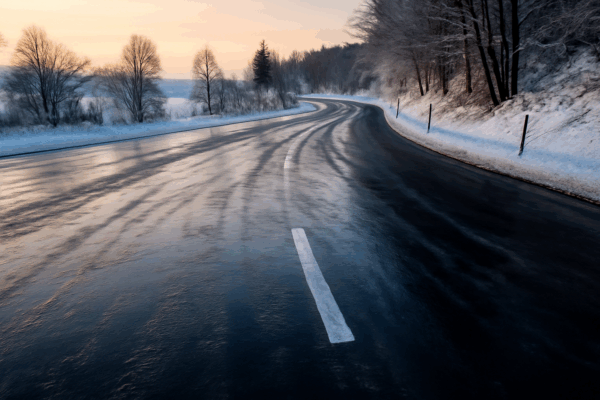
When a driver encounters black ice, the result can be disastrous. The vehicle may suddenly lose traction, causing the driver to lose control. Black ice typically forms on bridges, overpasses, and shaded sections of the road where sunlight cannot reach. The slippery surface may seem wet at first glance, but it is, in fact, frozen solid and dangerous. Without any immediate visual indication, drivers might continue their speed, unaware of the danger beneath them.
The accidents that occur from black ice often involve skidding, spinning, or even colliding with nearby vehicles, trees, or guardrails. In many cases, these crashes happen quickly and without any clear sign of what caused the loss of control. Drivers may not even realize what happened until after the accident has already occurred.
Partner Partner Partner Attorney Attorney Attorney
Benjamin J.
Andrews
Robert
Maranto
Tom
Kotrys
Robert J.
Maranto, III
Thanon
Rezvi

Rea Marcelo
Roxas
Defining Negligence in Black Ice Accidents
In legal terms, negligence occurs when someone fails to take reasonable precautions to prevent harm. In black ice cases, negligence typically involves a failure to adequately treat the roads, post appropriate warnings, or take action to prevent dangerous driving conditions.
Road maintenance is the responsibility of local municipalities and government agencies. When these authorities fail to salt, sand, or treat the roads, they may be seen as negligent if an accident occurs because of it. Property owners, too, can be held responsible if they fail to address ice or snow on their premises, particularly if they have prior knowledge of the freezing conditions.
The Role of Road Maintenance in Black Ice Cases
Road maintenance is critical in preventing accidents caused by black ice. Municipalities and government agencies are required to keep public roads safe, especially when freezing weather is forecast. This includes ensuring roads are properly treated with salt, sand, or other de-icing chemicals in a timely manner to prevent ice from forming.
The team is very personable, patient and empathetic with their clients. They are upfront with you and will explain the entire process with you, they never lead you to believe otherwise, they tell you like it is and will not sell you a million dollar dream. Trust in Andrews, Bernstein & Maranto, PLLC, they work for you and he looks out for your best interest.” - Jane D.
When roads are left untreated or are not adequately cleared of snow and ice, authorities may be found negligent. This is particularly true when weather forecasts predict freezing temperatures or the roads have a history of being icy during certain weather conditions. Failure to respond to known hazards can lead to accidents, making it easier to prove negligence in court.
In cases where roads are not treated or maintained properly, victims may have a case against the responsible government agency or property owner, depending on the circumstances. Demonstrating that the conditions were predictable and that the necessary steps were not taken to prevent accidents is crucial for proving negligence.
Proving Negligence in Court
To establish negligence in a black ice case, it is necessary to prove certain elements. The plaintiff must show that the defendant had a duty of care, that they breached that duty, that the breach caused the accident, and that damages were incurred as a result.
The first element is showing that the defendant had a duty of care. In the case of a road maintenance agency, this means that they have a legal responsibility to ensure that roads are safe and passable during winter conditions. The second element involves proving that the defendant breached this duty. For instance, this could mean failing to salt the roads or not posting adequate warning signs for hazardous conditions.
Should I Take The First Settlement Offer? Steps to File a Personal Injury ClaimRelated Videos
The third element, causation, requires the plaintiff to demonstrate that the breach of duty directly led to the accident. For example, the defendant’s failure to treat the road with de-icing materials might have directly caused the black ice accident. Finally, the plaintiff must show that damages were incurred due to the crash. These damages can include physical injuries, property damage, medical expenses, and lost wages.
The Role of Weather Reports and Expert Testimony
Weather reports are often a key piece of evidence in black ice accident cases. These reports can show that freezing conditions were anticipated or already in effect, making it clear that the road conditions were hazardous. Expert testimony from meteorologists, road maintenance specialists, or accident reconstructionists can help further establish how the black ice formed and how it contributed to the accident.
Expert witnesses can provide valuable insight into the expected formation of black ice and the proper precautions that should have been taken to prevent it. This kind of expert testimony can be crucial in proving that the road maintenance authorities or property owners were negligent in their duties.
Verdicts & Settlements
Government Entities and Their Responsibility
In cases involving government entities, proving negligence becomes more complex due to governmental immunity laws. These laws typically protect government agencies from liability unless certain conditions are met. However, it is still possible to prove negligence if it can be shown that the agency had prior knowledge of hazardous road conditions and failed to act accordingly.
This could include not salting or sanding the roads despite knowing that temperatures were likely to cause freezing. In such cases, proving that the conditions were foreseeable and that the responsible agency did not take proper action is key. Claims against government entities often have stricter time limits and require specific procedures to be followed, so it is important to consult an attorney early on.
Common Legal Defenses in Black Ice Cases
There are several common defenses used in black ice accident cases. One of the most frequent defenses is comparative negligence, where the defendant argues that the plaintiff was partially responsible for the accident. This could be based on claims that the driver was speeding or not exercising enough caution on the road. Under New York’s comparative negligence law, even if the plaintiff is partially at fault, they may still be able to recover damages as long as their share of the fault is not greater than that of the defendant.
Another common defense is assumption of risk. In this argument, the defendant claims that the driver knew about the potential danger of black ice and chose to drive anyway, accepting the risk involved. Additionally, the defense may argue that there was no duty to treat the road or that the conditions were not severe enough to require treatment.
Why You Should Consult an Attorney
If you’ve been involved in an accident due to black ice, it’s important to seek legal counsel. Proving negligence in these types of cases can be complicated, and an experienced personal injury attorney will help guide you through the process. They can help you gather the necessary evidence, navigate the legal complexities, and advocate for your rights in court.
At Andrews, Bernstein & Maranto, PLLC, we specialize in cases involving accidents caused by hazardous road conditions, including black ice. Our team is committed to helping victims of negligence secure the compensation they deserve. Contact us today for a consultation and find out how we can assist you in your case.
Black ice accidents are not only dangerous but often the result of negligence on the part of road maintenance authorities or property owners. If you’ve been involved in such an accident, proving negligence is crucial to obtaining compensation for your injuries and damages. It is important to understand how black ice forms, the responsibilities of those responsible for road maintenance, and the steps needed to prove negligence. Reach out to an experienced attorney to investigate your case and help you navigate the legal process.
To learn more about this subject click here: How to Prove Negligence in a New York Bus Accident Case