
Pedestrian injuries during Buffalo summer festivals can involve more than one responsible party. A driver may be liable if traffic control failed or the driver ignored crosswalks, barricades, or police direction. An event organizer, vendor, property owner, security contractor, or public entity may also be part of the claim if unsafe crowd flow, poor layout, blocked exits, inadequate lighting, or negligent traffic planning contributed to the injury. New York rules on no-fault insurance, comparative fault, municipal notice deadlines, and personal injury filing deadlines can affect what steps an injured person should take after a festival-related pedestrian accident.





Pedestrian Injuries During Buffalo Summer Festivals: Who Can Be Held Liable for Unsafe Crowds or Traffic? 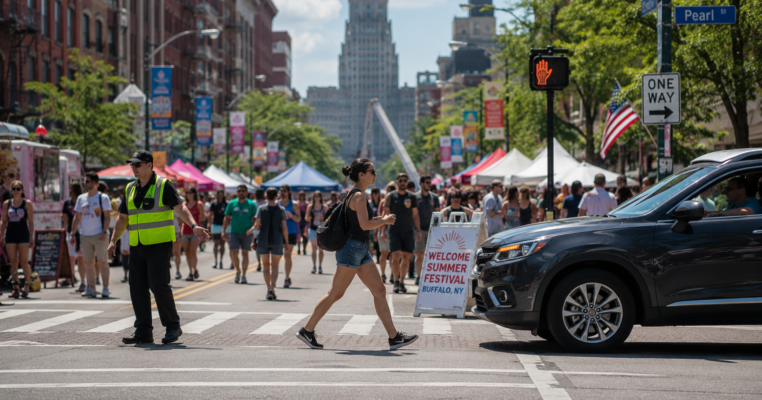
Summer in Buffalo brings people outside. Street festivals, waterfront events, food events, concerts, parades, races, and neighborhood gatherings can fill sidewalks, crosswalks, parking lots, and temporary pedestrian areas. Most visitors expect crowds and traffic, but they also expect organizers and property owners to plan for predictable risks.
A pedestrian injury at a festival is not always a simple accident. You may be dealing with a vehicle that entered a pedestrian zone, a rideshare pickup area placed too close to crowds, a vendor line spilling into traffic, a poorly marked crossing, a tripping hazard near a barricade, or a crowd surge near an entrance. When that happens, the question becomes: who had control over the hazard, and who failed to act with reasonable care?
If you were hurt while walking at or near a Buffalo festival, a claim may involve a driver, an event organizer, a venue, a contractor, a public agency, or several parties at once. You can learn more about related walking injury claims through the firm’s Buffalo pedestrian accident lawyers page at https://www.wnyinjurylawyers.com/buffalo-pedestrian-accident-lawyers/.
Partner Partner Partner Attorney Attorney Attorney
Benjamin J.
Andrews
Robert
Maranto
Tom
Kotrys
Robert J.
Maranto, III
Thanon
Rezvi

Rea Marcelo
Roxas
Why Festival Pedestrian Injuries Happen
Festival injuries often happen when a normal street or public space is temporarily changed. A road may be partly closed. A curb lane may become a vendor area. A parking lot may become a pedestrian walkway. A crosswalk may be crowded with people who are unfamiliar with the area. These changes can work well when they are planned and managed carefully.
Problems can arise when safety planning does not match the size or layout of the event. Common risks include:
- Confusing traffic patterns near road closures
- Crowds pushed into active vehicle lanes
- Poorly placed barricades, cones, or fencing
- Insufficient security or traffic control staff
- Unsafe rideshare, shuttle, or bus pickup areas
- Blocked sidewalks or crosswalks
- Food truck or vendor lines extending into pedestrian routes
- Poor lighting during evening events
- Uneven pavement, cords, mats, curbs, or temporary ramps
Drivers Can Still Be Liable Near Festivals
A festival crowd does not excuse unsafe driving. Drivers near summer events must be alert for pedestrians, road closures, stopped traffic, police direction, and sudden movement near crosswalks. A driver may be liable if they were speeding, distracted, impaired, impatient, or careless around a crowd.
Driver liability may arise when a motorist fails to yield, drives around a barricade, makes an unsafe turn, backs out of a lot without checking for pedestrians, or ignores a traffic officer. If a vehicle struck you, New York no-fault insurance may help cover medical bills and some lost wages, even before fault is decided. Pedestrian no-fault claims can involve strict paperwork and timing rules, so early action matters. The firm has more information on no-fault topics at https://www.wnyinjurylawyers.com/are-my-medical-bills-covered-through-no-fault-if-i-am-injured-in-an-auto-accident-in-new-york/.
The team is very personable, patient and empathetic with their clients. They are upfront with you and will explain the entire process with you, they never lead you to believe otherwise, they tell you like it is and will not sell you a million dollar dream. Trust in Andrews, Bernstein & Maranto, PLLC, they work for you and he looks out for your best interest.” - Jane D.
When an Event Organizer May Be Responsible
Event organizers often make key decisions about layout, crowd flow, staffing, vendor placement, emergency access, and pedestrian paths. When those decisions create an unsafe condition, the organizer may be examined as part of a claim.
A claim against an organizer may involve several questions. Was the event layout reasonable for the expected attendance? Were entrances and exits placed safely? Were pedestrian routes separated from vehicle routes? Were barricades and traffic control points adequate? Were vendors placed where lines would not block walkways? Were security staff trained to manage crowd movement? Did the organizer respond to known hazards or prior complaints?
Property Owners, Venues, and Contractors May Share Liability
Some events happen on public streets. Others take place in parks, parking lots, outdoor venues, courtyards, or privately owned spaces. A property owner or venue may be liable if a dangerous condition on the property caused or contributed to the injury.
Examples may include broken pavement, loose cables, poor lighting, unsecured mats, slippery surfaces, hidden holes, unsafe stairs, or crowd bottlenecks caused by the property layout. If a pedestrian falls while trying to avoid traffic or a crowd surge, the property condition may still matter. The firm discusses broader injury claims at https://www.wnyinjurylawyers.com/buffalo-personal-injury-lawyers/.
Large events also rely on outside companies. A security company may manage lines or crowd control. A traffic contractor may place barricades. A vendor may run cables or set up tents. A transportation company may handle shuttles. Each contractor may be responsible for its own work. These cases require careful investigation because contracts can divide responsibility between the organizer, the venue, and outside vendors.
Should I Take The First Settlement Offer? Steps to File a Personal Injury ClaimRelated Videos
Claims Involving the City or Another Public Entity
Some Buffalo festival injury claims may involve a city department, county agency, public authority, or public property. Claims against public entities in New York can have much shorter notice requirements than ordinary injury claims. In many municipal injury cases, a Notice of Claim may need to be served within 90 days.
That does not mean every festival injury is a city claim. A private organizer, driver, vendor, contractor, or property owner may still be responsible. The key is identifying every party that controlled the location, traffic pattern, permit conditions, or safety decision tied to the injury. Because public entity deadlines can pass quickly, it is safer to have the incident reviewed early instead of assuming the ordinary personal injury deadline is the only deadline that applies.
What If You Were Partly at Fault?
Crowded events can create disputes about fault. An insurance company may argue that you crossed outside a marked area, stepped into traffic, ignored a warning, or moved with the crowd without looking. In New York, being partly at fault does not automatically prevent a recovery. Your compensation may be reduced by your percentage of fault.
Verdicts & Settlements
What to Do After a Festival Pedestrian Injury
After medical care is addressed, try to preserve evidence quickly. Festival scenes change fast. Tents come down, barricades move, vendors leave, and temporary traffic patterns disappear.
Helpful steps include:
- Report the incident to police, security, event staff, or the property owner
- Take photos of the scene, lighting, traffic setup, crowd area, and hazard
- Get names and contact information for witnesses
- Save event tickets, wristbands, receipts, parking records, or rideshare records
- Keep shoes, clothing, and damaged personal items
- Follow medical advice and attend follow-up care
- Avoid giving a recorded statement before understanding your rights
If the injury involved a vehicle, no-fault paperwork may be needed. If the injury involved a public entity, special notice rules may apply. If the injury involved an unsafe property condition, the exact condition should be documented before it changes.
How an Attorney Can Help Identify Liability
Festival-related pedestrian injury cases can be fact-heavy. A lawyer may investigate traffic plans, event permits, vendor contracts, incident reports, police records, surveillance video, insurance policies, and site conditions. The goal is to identify what went wrong and who had the ability to prevent it.
An attorney may also help separate claims. A pedestrian hit by a car near a festival may have a no-fault claim for basic economic losses and a separate injury claim against the responsible driver or another negligent party. A person injured by a crowd-control failure may have a claim against an organizer, venue, contractor, or security company.
If your injury happened while walking near a street closure, crosswalk, bus stop, parking lot, entrance gate, vendor area, or festival crowd, the details matter. Andrews, Bernstein & Maranto, PLLC represents injured people in Buffalo, Erie County, Western New York, and nearby areas. You can contact the firm at https://www.wnyinjurylawyers.com/contact-us/ for a case review.
Speak With a Buffalo Pedestrian Accident Lawyer
After a summer festival injury, you may feel unsure whether the accident was caused by a driver, an unsafe crowd setup, poor traffic planning, or a property hazard. You do not need to sort that out alone. Andrews, Bernstein & Maranto, PLLC can review what happened, explain possible claims, and help you understand the deadlines that may apply.
The firm’s main office is located at 420 Franklin St, Buffalo, NY 14202, and the team serves clients throughout Buffalo and nearby areas. For related injury topics, visit the Buffalo personal injury blog at https://www.wnyinjurylawyers.com/buffalo-personal-injury-blog/.
This article is for informational purposes only and is not legal advice. Consult an attorney about your specific situation.