
Buffalo pedestrian accident risk can rise in fall as daylight fades earlier and routine trips begin or end in lower light. A walk home from work, a bus connection, a school pickup, or an evening errand that happened in daylight during summer may take place at dusk or after dark in October or November.
If you are struck while walking, visibility can become a central part of the claim. Lighting, vehicle speed, sight lines, traffic signals, crossing location, headlights, weather, video, and witness accounts may help show what happened and what each person could reasonably see.
Andrews, Bernstein & Maranto, PLLC helps injured pedestrians in Buffalo, Erie County, Western New York, and nearby areas understand insurance rules, evidence, fault questions, and filing deadlines after a crash.









Why Shorter Fall Days Matter for Pedestrian Safety 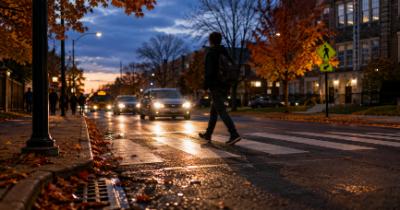
Buffalo loses daylight as fall progresses, while many daily schedules stay the same. A commute, grocery trip, dog walk, school activity, or bus ride may shift from daylight into dusk without any change in the time you leave home.
Dusk can create difficult visibility conditions. The sky may still appear bright while crosswalks, sidewalks, and curb areas are darker. Parked vehicles, trees, bus shelters, storefronts, and buildings can create shadows. Wet pavement can reflect headlights and streetlights. A setting sun can also create glare before the roadway becomes dark.
These conditions do not decide fault on their own. They can affect how much time a driver has to detect a pedestrian and how a reasonably careful driver should respond to changing visibility.
A dusk crash can become an evidence problem quickly. Photos, video, witness information, and the exact time of the collision can help preserve details before the scene changes.
Where Fall Pedestrian Accidents Often Happen
Fall pedestrian accidents can happen anywhere a person on foot and a vehicle cross paths. Lower light can create greater concern in areas with turning traffic, parked vehicles, buses, driveways, or several lanes of travel.
Common conflict points include:
- Marked and unmarked crosswalks
- Intersections where drivers turn across a pedestrian path
- Bus stops and transit pickup areas
- Parking lots and garage entrances
- School and college areas
- Residential streets with curbside parking
A driver may look left for an opening in traffic and fail to check the crosswalk before turning right. A pedestrian may emerge from behind a parked vehicle where a driver has only a short view. A vehicle leaving a parking lot may cross a sidewalk before entering the street. Lower light can make these routine traffic movements harder to read.
For more information about pedestrian injury claims in Buffalo, visit:
https://www.wnyinjurylawyers.com/buffalo-pedestrian-accident-lawyers/
Partner Partner Partner Attorney Attorney Attorney
Benjamin J.
Andrews
Robert
Maranto
Tom
Kotrys
Robert J.
Maranto, III
Thanon
Rezvi

Rea Marcelo
Roxas
How Low Light Can Affect Reaction Time and Perception
Low light can affect reaction time and perception because pedestrian safety depends on more than whether a driver can see a person. The driver must also recognize that the object ahead is a pedestrian, understand where that person is moving, and react in time.
A driver approaching an intersection may be watching traffic signals, oncoming vehicles, lane markings, mirrors, and nearby cars. At the same time, a pedestrian may be partly hidden by a parked vehicle, bus shelter, tree, or another person. Reduced light can make that visual task more difficult.
Glare can create a separate problem. A setting sun may shine directly into a driver’s field of view. After sunset, approaching headlights can reduce contrast and make it harder to detect a person beyond the strongest area of light.
Drivers still must use reasonable care. A pedestrian accident claim may examine vehicle speed, attention, braking, turning movement, headlight use, visibility, and whether the driver had enough time and distance to react.
The team is very personable, patient and empathetic with their clients. They are upfront with you and will explain the entire process with you, they never lead you to believe otherwise, they tell you like it is and will not sell you a million dollar dream. Trust in Andrews, Bernstein & Maranto, PLLC, they work for you and he looks out for your best interest.” - Jane D.
New York Crosswalk Rules and Fault Questions
New York crosswalk rules and fault questions depend on the facts of the crash. A driver may bear responsibility for failing to yield when required, speeding, making an unsafe turn, driving while distracted, backing without an adequate lookout, or failing to use reasonable care under the conditions.
Pedestrian conduct can also become part of the analysis. Investigators may examine whether you crossed with a signal, used a crosswalk, entered the road suddenly, or could reasonably see approaching traffic.
New York changed its comparative fault rule for certain motor vehicle personal injury actions in 2026. For covered actions subject to Article 51 of the Insurance Law that are commenced on or after May 26, 2026, CPLR 1411(b) can bar recovery when the claimant’s culpable conduct is greater than the culpable conduct of the person or persons from whom recovery is sought. When recovery is not barred, the claimant’s share of fault can still reduce recoverable damages. The rule that applies depends on the claim, the parties, and the circumstances.
This makes evidence about lighting, sight lines, traffic controls, vehicle speed, and pedestrian movement especially useful. A traffic ticket, a statement made at the scene, or the location of impact may be relevant, but one fact may not resolve every fault question.
You can read more about pedestrian fault issues at:
https://www.wnyinjurylawyers.com/pedestrian-accident-fault/
What Evidence Matters in a Dusk or Night Pedestrian Crash
A fall pedestrian crash can raise questions that are harder to answer days later. The scene may look different in full daylight. Leaves may be removed, parked vehicles may move, lighting conditions may change, and a business camera may overwrite its recording.
Useful evidence can include:
- Photographs of the crosswalk, curb, signs, signals, and streetlights
- Wide photographs showing sight lines in each direction
- Video from businesses, homes, buses, dash cameras, or traffic systems
- Witness names and contact information
- The exact time and location of the collision
- Weather and roadway conditions
- Vehicle damage and headlight condition
- Police records
- Medical records and bills
If your condition allows, photographs taken near the same time of day can help document lighting at the location. You do not need to recreate the crash. The goal is to preserve details that may later help explain what a driver or pedestrian could reasonably see.
Information about losses that may be part of a pedestrian injury claim is available at:
https://www.wnyinjurylawyers.com/pedestrian-accident-damages/
Should I Take The First Settlement Offer? Steps to File a Personal Injury ClaimRelated Videos
New York No-Fault Benefits May Apply to Injured Pedestrians
When a pedestrian is struck by a motor vehicle in New York, no-fault insurance may provide benefits for qualifying medical expenses and certain lost earnings without requiring the pedestrian to prove fault first.
A pedestrian generally submits the no-fault claim to the insurer for the vehicle that struck the person. Different procedures can apply when the vehicle is uninsured or cannot be identified.
Written notice of a no-fault claim is generally due within 30 days after the accident. Limited exceptions may apply when there is clear and reasonable justification for late notice. Missing a deadline can create avoidable disputes, so it is useful to identify the proper insurer and start the claim process promptly.
The firm explains this deadline in more detail at:
https://www.wnyinjurylawyers.com/no-fault-application-time-frame/
No-fault benefits and a liability claim are different. A separate injury claim may seek compensation for losses that no-fault benefits do not fully cover, depending on the injuries, insurance coverage, fault, and current New York law.
Verdicts & Settlements
What to Do After a Fall Pedestrian Accident in Buffalo
After a fall pedestrian accident in Buffalo, your health should come first. Call 911 when someone may be injured or the location is unsafe. Accept appropriate medical care and describe your symptoms accurately. Some injuries are clear at the scene, while others become more noticeable after the initial shock passes.
When your condition allows:
- Get the driver’s name, vehicle information, and insurance details.
- Photograph the vehicle, roadway, crosswalk, signals, signs, and lighting.
- Ask witnesses for contact information.
- Note nearby businesses, homes, buses, or traffic cameras that may have recorded the crash.
- Keep damaged clothing, shoes, glasses, bags, or personal items.
- Save medical records, bills, wage information, and insurance letters.
- Keep copies of claim forms and correspondence.
- Avoid guessing about fault in recorded statements or social media posts.
General injury information is available through the firm’s blog at:
https://www.wnyinjurylawyers.com/buffalo-personal-injury-blog/
How a Buffalo Pedestrian Accident Lawyer Can Help
A Buffalo pedestrian accident lawyer can help investigate a crash involving poor visibility beyond what appears in the police report. An attorney can work to preserve video before it is overwritten, identify witnesses, examine vehicle and insurance information, document the roadway layout, and evaluate whether more than one person or entity may share responsibility.
Legal counsel can also help identify the proper no-fault insurer, track filing deadlines, review allegations of shared fault, organize medical documentation, and evaluate losses supported by the evidence.
Andrews, Bernstein & Maranto, PLLC represents injured people from its Buffalo office at 420 Franklin St, Buffalo, NY 14202, and serves clients throughout Buffalo, Erie County, Western New York, and nearby areas.
Talk With a Buffalo Pedestrian Accident Lawyer About Your Case
If you were injured while walking in Buffalo or a nearby Western New York community, you can speak with Andrews, Bernstein & Maranto, PLLC about what happened, the insurance issues involved, and the deadlines that may apply.
Call (716) 333-5525. The firm accepts calls 24 hours a day, seven days a week.
You can also request a case review at:
https://www.wnyinjurylawyers.com/contact-us/
This article is for informational purposes only and is not legal advice. Consult an attorney about your specific situation.
[