
Winter is a defining season for Buffalo and Western New York. With significant snowfall and icy roads, this region faces some of the most challenging weather conditions in the country. The snowy weather not only makes driving dangerous, but it also plays a crucial role in determining who is responsible when an accident occurs. At Andrews, Bernstein & Maranto, PLLC, we know how these winter conditions can complicate liability in car accidents. Understanding how snowy weather impacts the roads—and how the law views such accidents—can be vital for anyone involved in a winter crash.












When winter storms hit, it’s not just the cold temperatures that create hazards; it’s the snow, ice, and slippery surfaces that challenge drivers every day. But when things go wrong, who is responsible? It’s essential to know the answers before you’re caught in a snowy weather accident.
The Role of Weather in Car Accidents: How Snow and Ice Change the Driving Landscape 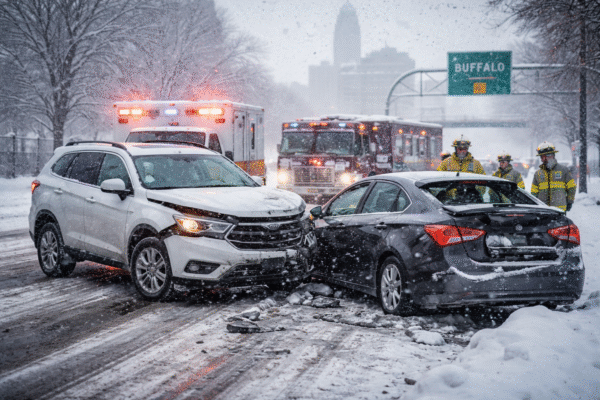
Each year, Buffalo experiences heavy snowfall, which creates dangerous driving conditions. While the snow may add a festive charm to the region, it also contributes to an increase in car accidents. In fact, snowy conditions are among the leading causes of crashes during winter months, and Buffalo’s icy roads often become a proving ground for even the most experienced drivers. Here’s how weather factors into car accidents:
- Slippery Road Surfaces: Ice and snow buildup can cause roads to become slick and difficult to navigate. Black ice—thin layers of ice that are invisible to drivers—pose a significant risk, as drivers often don’t realize the danger until it’s too late.
- Poor Visibility: Snowstorms can severely limit visibility, making it difficult to see other drivers, traffic signals, or obstacles. In such conditions, drivers may not have enough time to react, leading to crashes.
- Stopping Distance: Snow and ice reduce the friction between tires and the road, increasing the distance it takes for a vehicle to stop. On normal roads, a driver can stop within a reasonable distance, but this isn’t the case during snowy weather, where cars may slide even after brakes are applied.
- Snow Accumulation on Roads: Piles of snow that are left on the side of the road or in intersections can make it harder to navigate and can even block the view of other vehicles. This can increase the risk of collisions, especially in busy city environments like Buffalo.
Partner Partner Partner Attorney Attorney Attorney
Benjamin J.
Andrews
Robert
Maranto
Tom
Kotrys
Robert J.
Maranto, III
Thanon
Rezvi

Rea Marcelo
Roxas
Determining Liability: Who Is at Fault When Snowy Weather Contributes to Car Crashes?
In Buffalo and Western New York, liability in car accidents is often determined by the actions of the parties involved and the conditions at the time of the crash. However, when snowy weather plays a role, understanding liability becomes a bit more complex. Here are several factors that influence liability when winter weather contributes to a car crash:
- Negligence of Drivers: Regardless of weather conditions, drivers are required to exercise reasonable care when operating their vehicles. Snowy roads may provide a valid reason for slower driving, but that doesn’t mean it’s okay to disregard basic safety precautions. Drivers who fail to reduce their speed in winter weather or do not adjust their driving to the road conditions could be held liable for accidents.
- Local Government Responsibility: In some cases, local municipalities such as the City of Buffalo are responsible for maintaining road conditions during snowy weather. If an accident occurs due to poorly maintained roads, the local government could potentially be held liable. For instance, if a road is not cleared of snow or ice and causes an accident, the injured party might have grounds for a lawsuit against the city or county for failing to fulfill its duty of care.
- Comparative Negligence: New York follows a comparative negligence rule, meaning that liability in an accident can be shared among the parties involved, based on their percentage of fault. If you are involved in an accident during a snowstorm, you could be found partially responsible if you were speeding, but the other driver might share some fault for not adjusting their driving to the weather.
- Insurance Coverage in Snowy Weather Accidents: Insurance companies often have clauses that address winter weather accidents. If a crash happens because of poor road conditions, the driver’s insurance policy may cover the damages, provided the driver wasn’t negligent. Additionally, insurance companies often assess liability differently in winter months because of the added risk that snow and ice bring.
The team is very personable, patient and empathetic with their clients. They are upfront with you and will explain the entire process with you, they never lead you to believe otherwise, they tell you like it is and will not sell you a million dollar dream. Trust in Andrews, Bernstein & Maranto, PLLC, they work for you and he looks out for your best interest.” - Jane D.
What Should You Do After an Accident During Snowy Weather?
If you are involved in a car crash in Buffalo or Western New York during a snowstorm or when icy roads are present, knowing what to do next is crucial for protecting your rights. Here are steps you should take if you’re in a winter weather accident:
- Stay Calm and Check for Injuries: If you’re involved in an accident, the first priority is to ensure everyone is okay. Check yourself and your passengers for injuries, and if needed, call for medical assistance right away.
- Move to a Safe Location: If it’s safe to do so, move your car to a location where it is less likely to cause further accidents. Turn on your hazard lights to alert other drivers to your presence.
- Call the Police: In snowy conditions, it’s essential to have an official record of the accident. Call the police and report the crash, especially if there are significant damages or injuries. An official report can be crucial in determining fault.
- Document the Scene: If you can, take photos of the crash scene, including the snow and road conditions. Document any visible damage to vehicles and the area surrounding the accident. If there are skid marks, damage to guardrails, or other relevant details, make sure to capture them.
- Exchange Information: Exchange contact information with the other driver(s), including names, phone numbers, driver’s license numbers, and insurance details. If possible, get contact information from witnesses who saw the accident happen.
- Consult a Lawyer: If you’ve been injured or if there’s a question of liability, it’s wise to consult with an experienced personal injury lawyer. They can help you understand your rights and how to pursue compensation for your injuries or property damage.
Should I Take The First Settlement Offer? Steps to File a Personal Injury ClaimRelated Videos
Winter Safety Tips: How to Prevent Accidents During Snowy Weather
While accidents can happen despite the best efforts, there are measures you can take to reduce the likelihood of a crash during snowy weather. These winter driving tips can help keep you safer on the roads:
- Drive Slower: Adjust your speed based on the road conditions. Snow and ice require extra time to stop, so keep a safe distance from other vehicles and drive at a slower pace.
- Use Winter Tires: Winter tires provide better traction in snow and ice, making it easier to navigate slippery roads. Consider equipping your car with winter tires if you frequently drive in snowy conditions.
- Clear Snow and Ice from Your Vehicle: Before driving, make sure your car is completely clear of snow and ice, including windows, mirrors, headlights, and taillights. This not only helps with visibility but also prevents snow from blowing off the vehicle and causing hazards for other drivers.
- Keep Emergency Supplies in Your Car: In case you’re stuck in a snowstorm, it’s helpful to have emergency supplies on hand. Keep items like blankets, water, non-perishable snacks, a flashlight, and a phone charger in your car.
- Stay Informed: Pay attention to weather reports before heading out on the road. If a snowstorm is forecast, consider postponing your trip or opting for public transportation if possible.
Verdicts & Settlements
Winter Weather and Liability in Buffalo Car Crashes
Buffalo and Western New York’s snowy weather plays a significant role in the frequency and severity of car accidents during the winter months. As a driver, it’s crucial to understand how snow and ice affect the roads and how liability is determined in accidents. When weather conditions are dangerous, both drivers and municipalities have a responsibility to adjust to the situation to prevent crashes.
If you’re involved in a car accident during snowy weather, the experienced legal team at Andrews, Bernstein & Maranto, PLLC is here to help. Whether the accident was due to another driver’s negligence or poorly maintained roads, our attorneys are prepared to fight for the compensation you deserve. Contact us today for a free consultation and let us guide you through the legal process.
To learn more about this subject click here: Passenger Injuries in Car Accidents