A summer crash in Buffalo involving a vacation traveler or out-of-state driver can raise questions about insurance coverage, New York no-fault benefits, evidence, medical treatment, and where a lawsuit may be filed. New York traffic laws generally apply to driving conduct in a collision that occurs in Buffalo. Insurance coverage and jurisdiction questions may require a closer review of the states connected to the drivers, vehicles, and policies.
You may need to provide written notice to the correct no-fault insurer within 30 days, preserve travel-related records, and identify every liability, rental, employer, uninsured motorist, or underinsured motorist policy that may apply. Andrews, Bernstein & Maranto, PLLC helps injured people understand these overlapping issues after serious car accidents in Buffalo, Erie County, Western New York, and nearby areas.
A traveler may leave Buffalo within days, but important insurance and evidence deadlines can begin on the date of the crash.











How Summer Travel Changes Buffalo Car Accident Claims 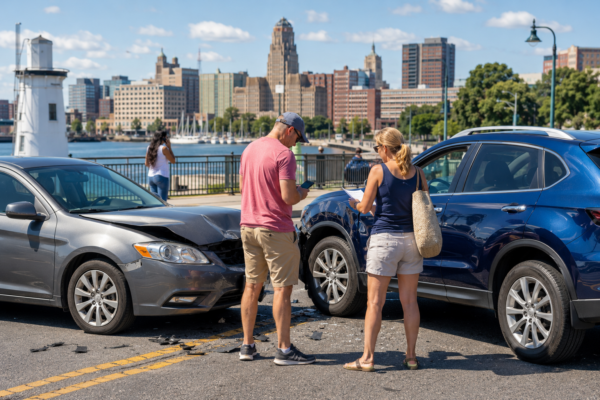
Buffalo and Western New York attract more visitors during the summer. Travelers may be heading to Niagara Falls, crossing the United States and Canadian border, attending festivals, visiting family, or using Interstate 90, Interstate 190, Route 33, or local streets to reach hotels and attractions.
A collision involving a visitor is still a car accident claim, but several facts can make the claim more complicated:
- The at-fault driver may live in another state or country.
- The vehicle may be rented, borrowed, or owned by an employer.
- The insurance policy may have been issued outside New York.
- A passenger may live in a different state from both drivers.
- Medical treatment may begin in Buffalo and continue after the injured person returns home.
- Witnesses, vehicles, and records may leave New York soon after the crash.
These details do not automatically prevent you from bringing a claim. They may affect which policies apply, which forms must be filed, where evidence is located, and which court may have authority over a lawsuit.
For a broader explanation of New York collision claims, visit the Buffalo car accident lawyers page.
Partner Partner Partner Attorney Attorney Attorney
Benjamin J.
Andrews
Robert
Maranto
Tom
Kotrys
Robert J.
Maranto, III
Thanon
Rezvi

Rea Marcelo
Roxas
Which State’s Law Applies After a Buffalo Crash?
New York traffic laws generally apply to the conduct of drivers involved in a collision in Buffalo. A driver visiting from Pennsylvania, Ohio, Florida, Ontario, or another jurisdiction must follow New York traffic rules while operating a vehicle in this state.
Insurance coverage requires a separate analysis. A policy issued in another state may contain provisions that address what happens when the insured vehicle is driven in New York. New York law may also affect coverage available to some nonresident motorists. The result depends on the insurer, policy language, vehicle, residency, and other facts.
A lawyer may need to review:
- Where the collision occurred
- Where each driver and passenger lives
- Where each vehicle is registered
- Which state or province issued each insurance policy
- Whether a vehicle was rented, borrowed, or used for work
- Whether the injured person has coverage through a household member
- Whether more than one policy may cover the loss
- Whether a government vehicle or public authority was involved
This review can be valuable when one insurer says another company should handle the claim. Conflicting instructions can delay medical payments and create unnecessary confusion.
New York No-Fault Benefits May Apply
New York is a no-fault insurance state. In many motor vehicle accidents, no-fault coverage pays qualifying medical expenses, a portion of lost earnings, and certain other necessary expenses without requiring you to prove who caused the crash.
New York no-fault coverage generally provides up to $50,000 per eligible injured person for basic economic loss. Written notice of the claim generally must be provided to the applicable no-fault insurer as soon as reasonably practicable and no later than 30 days after the accident. A late filing may be accepted when the injured person provides written proof of a clear and reasonable justification, but you should not rely on an exception.
The correct no-fault insurer often depends on your role in the accident:
- A driver or passenger generally files through the insurer covering the vehicle occupied at the time of the crash.
- A pedestrian generally files through the insurer covering the vehicle that struck the pedestrian.
- Different rules may apply to motorcycles, uninsured vehicles, buses, employer-owned vehicles, and claims involving the Motor Vehicle Accident Indemnification Corporation.
For related information, visit the no-fault claim benefits page.
Vacation travel can make deadlines easier to miss. You may be away from home, receiving treatment in more than one state, or waiting for documents from a rental company. Report the accident promptly and keep a copy of every form, letter, email, and claim number.
The team is very personable, patient and empathetic with their clients. They are upfront with you and will explain the entire process with you, they never lead you to believe otherwise, they tell you like it is and will not sell you a million dollar dream. Trust in Andrews, Bernstein & Maranto, PLLC, they work for you and he looks out for your best interest.” - Jane D.
What Happens When the Other Driver Has Out-of-State Insurance?
An out-of-state insurance policy does not mean that you have no claim. The insurer may still be responsible for losses caused by its insured driver, subject to the policy terms and applicable law.
Coverage questions may arise when:
- The policy has limits that differ from New York minimum requirements.
- The vehicle is registered in another state or province.
- The insurer uses an adjuster located outside New York.
- The policyholder was driving a rental or borrowed vehicle.
- The driver was working at the time of the collision.
- The at-fault driver has no valid insurance.
- The available liability coverage is not enough to address the injuries.
The firm’s out-of-state drivers insurance page discusses related coverage issues.
A detailed review may identify liability insurance, supplemental rental coverage, employer coverage, household coverage, or uninsured and underinsured motorist protection. Policy limits matter because serious injuries may cause medical expenses, lost income, future treatment needs, and other losses that exceed one policy.
The insurance policy limits resource explains why identifying all available coverage can be a central part of an accident investigation.
Should I Take The First Settlement Offer? Steps to File a Personal Injury ClaimRelated Videos
Rental Cars and Borrowed Vehicles Add Coverage Questions
Summer visitors often drive rental cars or vehicles owned by relatives. These arrangements may involve several possible sources of insurance:
- The driver’s personal auto policy
- Coverage provided through the rental company
- Optional protection purchased with the rental agreement
- Credit card rental benefits
- Coverage carried by the vehicle owner
- An employer’s commercial auto policy
- Uninsured or underinsured motorist coverage
The existence of several policies does not mean that each policy will pay. Policies may contain exclusions, priority provisions, notice requirements, or reimbursement terms. A rental agreement may also limit who is authorized to drive the vehicle.
Save the complete rental contract, reservation email, payment receipt, credit card benefit information, and optional coverage documents. Do not rely only on a shortened agreement or a digital summary that may become unavailable after the trip.
Evidence Can Disappear When Travelers Leave Buffalo
Out-of-state accident claims can become harder to investigate when the people and vehicles involved leave New York shortly after the collision. A witness may return home. A rental vehicle may be repaired and returned to service. Hotel or business surveillance footage may be overwritten. Cellphone photos may be lost.
Preserve the following evidence when available:
- Police report and incident number
- Photographs and videos of the vehicles, roadway, traffic controls, weather, and injuries
- Names and contact information for drivers, passengers, and witnesses
- Rental car agreements and reservation records
- Hotel, toll, parking, fuel, and travel receipts
- Rideshare records
- Medical records from Buffalo and later providers
- Vehicle repair estimates and towing records
- Insurance cards and policy information
- Emails, letters, and text messages from every insurer
- Dash camera, vehicle camera, or navigation information
A driver involved in a reportable New York crash generally must file an MV-104 report with the New York State Department of Motor Vehicles within 10 days when someone is injured or killed, or when damage to one person’s property exceeds $1,000. A police report does not necessarily replace the driver’s MV-104 filing obligation.
Verdicts & Settlements
Medical Treatment Across State Lines
You may receive emergency care in Buffalo and continue treatment after returning home. That is common, but treatment in several locations can create gaps or inconsistencies in the medical record.
Tell each provider that your symptoms began after a Buffalo motor vehicle accident. Keep a current list of hospitals, urgent care centers, primary care providers, specialists, physical therapists, imaging facilities, and pharmacies. Follow reasonable treatment recommendations and explain any interruption in care.
Insurance carriers may question whether later symptoms are connected to the collision. Consistent medical documentation can help show:
- When symptoms began
- How the condition changed
- Which treatment was recommended
- Whether the injuries affected work
- Whether the injuries limited daily activities
- Whether future treatment may be needed
Do not delay necessary care while waiting to return home. Your health should remain the first priority.
Fault and Serious Injury Claims in New York
No-fault benefits do not address every loss. Under New York law, a covered person generally must have a qualifying serious injury to recover damages for pain, suffering, and other non-economic losses from another covered person. The serious injury analysis depends on medical evidence and the statutory categories that may apply.
Fault may involve:
- Speeding
- Unsafe lane changes
- Distracted driving
- Failure to yield
- Following too closely
- Fatigued driving
- Impaired driving
- Unsafe turns
- Failure to obey a traffic signal or sign
A visitor’s unfamiliarity with Buffalo does not excuse unsafe driving. It may make evidence involving navigation use, sudden turns, missed exits, or lane changes more relevant.
New York generally provides a three-year limitations period for personal injury actions. Shorter deadlines and additional notice requirements can apply to claims involving municipalities, public authorities, government vehicles, wrongful death, or other special circumstances. Waiting can also make video, vehicle data, witness memories, and insurance records harder to obtain.
Steps to Take After a Summer Crash With an Out-of-State Driver
Protect your health first. Call 911, request medical assistance, and report the collision. Exchange driver, vehicle, registration, and insurance information. Photograph both sides of every insurance card and the complete rental agreement when one is available.
After leaving the scene:
- Notify the appropriate insurer promptly.
- Ask for the no-fault application and claim number.
- Keep copies of every form, letter, email, and medical bill.
- Request the police report.
- File an MV-104 when the crash meets New York reporting requirements.
- Save damaged property, travel records, and rental documents.
- Continue necessary medical care.
- Avoid guessing about fault, speed, distance, or injuries in a recorded statement.
- Do not sign a broad medical authorization without understanding its scope.
- Speak with a lawyer before accepting a settlement or signing a release.
An adjuster may request a statement while you are still traveling or recovering. You can provide basic notice of the accident without speculating about facts that you do not know.
Frequently Asked Questions About Out-of-State Driver Accidents in Buffalo
Can I Bring a Claim if I Live Outside New York?
Yes. Living outside New York does not automatically prevent you from pursuing a claim for a collision that occurred in Buffalo. The location of the crash, the parties’ residences, policy terms, and other facts may affect jurisdiction and insurance coverage.
Which Insurer Pays My Medical Bills After a Buffalo Crash?
The answer often depends on whether you were a driver, passenger, pedestrian, motorcyclist, or occupant of a special type of vehicle. In many cases, a driver or passenger seeks no-fault benefits through the insurer covering the occupied vehicle. Exceptions can apply.
Does an Out-of-State Driver’s Lower Policy Limit Control the Claim?
Not always. The policy, insurer, vehicle, and applicable New York law must be reviewed. Other coverage, including rental, employer, household, uninsured motorist, or underinsured motorist insurance, may also apply.
Can I Continue Medical Treatment in My Home State?
You can generally continue necessary treatment near your home, but you should confirm billing and authorization requirements with the no-fault insurer. Keep every provider informed that the condition began after the Buffalo accident.
How Long Do I Have to File a Lawsuit?
New York generally allows three years for a personal injury action, but shorter deadlines may apply in some cases. The 30-day no-fault notice period and 10-day MV-104 reporting period are separate deadlines that can arise much sooner.
How a Buffalo Car Accident Lawyer Can Help
A Buffalo car accident lawyer can investigate the collision while coordinating with an injured person who lives elsewhere. The work may include:
- Obtaining police and DMV records
- Contacting local witnesses
- Locating surveillance or traffic camera footage
- Reviewing insurance policies and rental agreements
- Identifying employer or household coverage
- Communicating with adjusters
- Coordinating medical documentation from several states
- Evaluating damages
- Determining where a lawsuit may be filed
- Filing a lawsuit before the applicable deadline
Andrews, Bernstein & Maranto, PLLC has a Buffalo office at 420 Franklin Street, Buffalo, NY 14202. The firm serves injured people throughout Buffalo, Erie County, Western New York, and nearby areas.
Speak With a Buffalo Car Accident Lawyer
A summer trip can create additional insurance and evidence questions after a collision, especially when the drivers, vehicles, policies, and medical providers are connected to different states. Early legal guidance can help identify the correct insurers, preserve local evidence, and address deadlines before travelers and vehicles leave the area.
Call Andrews, Bernstein & Maranto, PLLC at (716) 333-5525 or visit the contact page to request a case review after a serious Buffalo car accident.
This article is for informational purposes only and is not legal advice. Consult an attorney about your specific situation.
[/ux_html]