
Summer cycling in Buffalo brings increased exposure to traffic hazards, especially on high-volume roads where vehicle speed, congestion, and limited bike infrastructure intersect. Andrews, Bernstein & Maranto, PLLC regularly works with injured cyclists who are hurt on these corridors during peak riding months. This content explains why bicycle accidents rise in the summer, identifies some of the most dangerous roads for cyclists in Buffalo, and outlines what injured riders should know about liability, insurance issues, and recovery options after a crash.
Buffalo becomes significantly more active during the warmer months, and that increase in activity changes the risk profile for cyclists in noticeable ways. More vehicles, more pedestrians, ongoing construction, and a surge in recreational biking all contribute to a more unpredictable driving environment. Cyclists who use city streets for commuting or recreation often find themselves sharing space with drivers who are distracted, rushed, or simply not expecting heavy bicycle traffic.











Why Summer Conditions Increase Bicycle Accident Risk in Buffalo 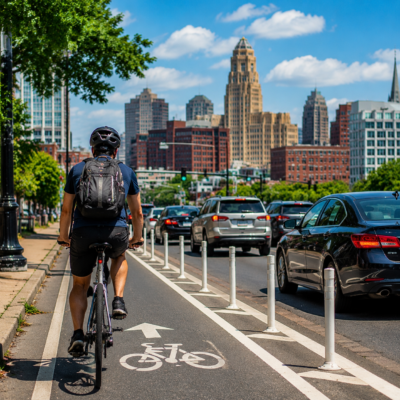
The shift into summer creates a unique combination of factors that elevate crash risk for cyclists. Streets that were relatively calm in winter become crowded corridors filled with tourists, commuters, and delivery vehicles. Drivers may also be less accustomed to sharing the road with bicycles after months of reduced cycling activity.
Another major factor is infrastructure strain. Construction projects tend to peak during warm months, leading to lane reductions, sudden detours, and inconsistent traffic patterns. These changes force cyclists into tighter spaces, often directly alongside fast-moving vehicles. In addition, delivery services and rideshare traffic increase during the summer, adding frequent stops and sudden lane changes into already congested roads.
When these elements combine, even experienced cyclists can face situations where reaction time is limited and visibility is compromised.
Main Street and Downtown Buffalo Corridors
Main Street remains one of the most heavily traveled corridors in Buffalo and consistently presents risks for cyclists. This area brings together buses, commuter traffic, pedestrians, and turning vehicles in a confined space. Cyclists often have to navigate bus stops, narrow lanes, and frequent intersections, which increases the likelihood of right-turn and intersection-related collisions.
Downtown intersections along Main Street are particularly hazardous because drivers may focus on signals, pedestrians, or merging traffic rather than cyclists traveling alongside them. Sudden lane changes and dooring incidents near parked vehicles also contribute to crash frequency in this area.
Partner Partner Partner Attorney Attorney Attorney
Benjamin J.
Andrews
Robert
Maranto
Tom
Kotrys
Robert J.
Maranto, III
Thanon
Rezvi

Rea Marcelo
Roxas
Elmwood Avenue and Residential-Commercial Mix Zones
Elmwood Avenue is a popular cycling route because it connects residential neighborhoods with commercial districts, but that same popularity also increases risk exposure. The corridor has steady vehicle flow throughout the day, and cyclists frequently share the road with drivers entering and exiting parking spaces.
One of the most common dangers on Elmwood Avenue is the dooring effect, where a parked driver opens a vehicle door directly into a cyclist’s path. Intersections also create visibility challenges, especially when vehicles turn left across bike traffic or fail to yield during right turns. While many cyclists choose this route for convenience, the combination of congestion and parking activity requires constant awareness.
Niagara Street and Waterfront Traffic Patterns
Niagara Street connects downtown Buffalo with waterfront destinations, making it a high-traffic route for both commuters and recreational riders. During summer months, this corridor sees increased activity from tourists and local residents traveling toward parks and waterfront attractions.
Vehicle speeds can vary significantly along this stretch, creating unpredictable conditions for cyclists. Some sections encourage faster driving, while others involve frequent stops and merging traffic. This inconsistency often leads to rear-end collisions or side-impact crashes when drivers misjudge distance or fail to notice cyclists during lane transitions.
The team is very personable, patient and empathetic with their clients. They are upfront with you and will explain the entire process with you, they never lead you to believe otherwise, they tell you like it is and will not sell you a million dollar dream. Trust in Andrews, Bernstein & Maranto, PLLC, they work for you and he looks out for your best interest.” - Jane D.
Delaware Avenue and Commuter Speed Corridors
Delaware Avenue is another major artery where cyclists face elevated risk due to higher vehicle speeds and steady commuter traffic. Unlike slower residential streets, this corridor often encourages continuous flow, which reduces reaction time for both drivers and cyclists.
Intersections along Delaware Avenue are particularly important points of risk. Drivers turning across traffic may not anticipate cyclists approaching from behind parked vehicles or riding along the curb. These conditions often lead to serious injury collisions, especially during peak commuting hours when traffic density is highest.
South Park Avenue and Industrial Vehicle Exposure
South Park Avenue introduces a different type of danger due to its mix of residential areas and industrial activity. This corridor frequently sees larger vehicles, including trucks and commercial traffic, which create visibility and turning challenges for cyclists.
Wide intersections and frequent access points increase the risk of collisions involving turning vehicles. Large trucks also have significant blind spots, which can make it difficult for drivers to detect cyclists traveling nearby. When crashes occur in these environments, injuries tend to be more severe due to vehicle size and impact force.
Sheridan Drive and Suburban Speed Risks
Sheridan Drive presents risk factors associated with higher-speed suburban traffic. While it may appear less congested than downtown corridors, vehicle speeds are often significantly higher, and intersections are spaced farther apart, which can encourage faster driving behavior.
Cyclists traveling along Sheridan Drive must contend with vehicles entering and exiting driveways, as well as drivers merging from side streets who may not anticipate bicycle traffic. The combination of speed and limited dedicated cycling space makes this corridor especially dangerous during peak travel times.
Should I Take The First Settlement Offer? Steps to File a Personal Injury ClaimRelated Videos
How Bicycle Crashes Commonly Occur in Buffalo
Across these corridors, certain crash patterns appear repeatedly. One of the most common is the right-hook collision, where a driver turns right across a cyclist’s path at an intersection. Another frequent scenario involves left-turn collisions, where a driver misjudges oncoming bicycle speed.
Dooring incidents remain common in areas with heavy parking activity, while rear-end crashes often occur when drivers are distracted or fail to notice cyclists stopped at intersections. Truck-related accidents are also a serious concern in industrial and commercial zones where large vehicles navigate tight turns.
Each of these crash types often involves questions of visibility, right-of-way, and roadway design rather than simple driver negligence alone.
Understanding Legal Options After a Bicycle Accident
After a bicycle accident, injured cyclists often face medical treatment, insurance communications, and financial uncertainty at the same time. Determining liability may involve reviewing police reports, witness accounts, traffic camera footage, and roadway conditions.
Andrews, Bernstein & Maranto, PLLC works with injured cyclists to evaluate how these factors apply to each case and whether compensation may be available for medical expenses, lost wages, and long-term recovery needs.
More information about bicycle crash liability can be found here:
https://www.wnyinjurylawyers.com/bicycle-accident-liability/
Cyclists can also review related resources on injury types and claim considerations:
https://www.wnyinjurylawyers.com/bicycle-accident-injuries/
https://www.wnyinjurylawyers.com/bicycle-accident-compensation/
https://www.wnyinjurylawyers.com/bicycle-accident-settlement-offers/
Verdicts & Settlements
Legal claims often depend on documentation, timing, and how clearly fault can be established. Early legal review can help preserve important evidence and clarify next steps.
Cyclists in Buffalo face a complex mix of traffic density, roadway design limitations, and seasonal congestion that increases risk during summer months. Understanding which corridors present the greatest danger can help riders stay more alert, but accidents can still occur even when precautions are taken. When injuries happen, having clarity on legal rights and insurance processes becomes an important part of recovery.
Andrews, Bernstein & Maranto, PLLC provides guidance for cyclists injured on Buffalo roads and helps evaluate claims based on the specific circumstances of each crash.
Disclaimer
This content is for informational purposes only and is not legal advice. Consult an attorney about your specific situation.