
After a summer car accident in Buffalo, NY, focus on safety, medical care, documentation, and insurance notice. Move out of traffic if you can do so safely, call 911 when anyone is hurt or property damage is more than minor, exchange information, take photos, get medical attention, and contact your insurance carrier promptly. New York is a no-fault insurance state, so your own policy may cover certain medical expenses and lost wages no matter who caused the crash. A separate injury claim may be available when your injuries meet New York’s serious injury threshold or another driver’s negligence caused losses beyond basic no-fault benefits.











Summer crashes in Western New York often involve more than driver error alone. Road work, bright sun glare, sudden rain, tourism traffic, motorcycles, bicycles, pedestrians, and crowded event areas can all affect how an accident happens. The steps you take in the first hours and days after the collision can help protect your health and preserve the details your insurance company or attorney may need later.
1. Get to a Safe Place and Check for Injuries 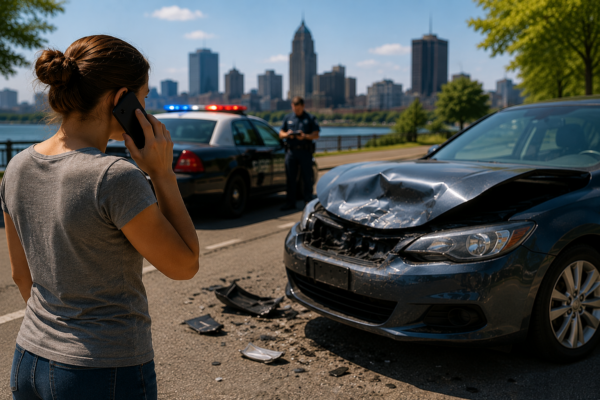
Your first step after a summer car accident is to prevent another crash. If your vehicle can be moved and it is safe to do so, pull to the shoulder, a nearby parking lot, or another safe area away from moving traffic. Turn on your hazard lights. If you have warning triangles or flares and can place them safely, use them to alert other drivers.
Check yourself, your passengers, and anyone else involved for injuries. Some injuries are easy to see, such as bleeding, broken bones, or burns from airbags. Other injuries may be harder to notice right away. Neck pain, back pain, headaches, dizziness, confusion, shoulder pain, numbness, and abdominal pain can develop or worsen after the adrenaline of the crash fades.
Do not assume you are fine just because you can walk or talk after the collision. Summer heat can also make symptoms harder to judge. Shock, dehydration, and stress may affect how you feel at the scene. Ask for medical help if there is any doubt.
2. Call 911 When There Are Injuries or Significant Damage
Call 911 after a crash involving injuries, major vehicle damage, blocked traffic, a suspected drunk or impaired driver, a hit-and-run, or any dangerous condition at the scene. A police response creates an official record of the collision. That record can help confirm the date, time, location, drivers, vehicles, witnesses, and other key facts.
When you speak with the police, give clear facts. Describe what you saw and experienced without guessing. For example, it is better to say, “The other vehicle entered my lane,” than to guess why it happened. Avoid admitting fault at the scene. Even a polite apology may later be repeated as if it were a statement about who caused the accident.
Ask how to obtain the accident report once it is available. Keep the report number or officer information with your records.
Partner Partner Partner Attorney Attorney Attorney
Benjamin J.
Andrews
Robert
Maranto
Tom
Kotrys
Robert J.
Maranto, III
Thanon
Rezvi

Rea Marcelo
Roxas
3. Document the Accident Scene Before Conditions Change
Accident scenes change fast. Vehicles are moved, debris is cleared, weather shifts, traffic patterns return to normal, and witnesses leave. Use your phone to record what you can, as long as you can do so safely.
Take photos and videos of all vehicles from multiple angles. Include damage, license plates, vehicle positions, skid marks, broken glass, traffic signals, stop signs, lane markings, construction barriers, road defects, standing water, and nearby landmarks. Photograph visible injuries as well. If the crash happened near a work zone, event venue, school, park, restaurant, or parking lot, capture the surroundings.
Collect names, phone numbers, addresses, driver’s license information, license plate numbers, insurance information, and vehicle owner details from the other driver or drivers. Get witness contact information, even if the witness says they only saw part of the crash. A short witness statement may help later if the insurance company disputes fault.
Buffalo summer conditions can matter. Make notes about bright sunlight, glare, rain, wet pavement, construction detours, blocked signs, heavy traffic, pedestrians, cyclists, motorcycles, delivery vehicles, or parked cars that have limited visibility. Do not rely on memory alone. Write a short timeline the same day while the details are fresh.
4. Get Medical Care and Follow the Treatment Plan
Medical evaluation protects your health and creates a record that connects your symptoms to the crash. See a doctor, urgent care provider, emergency department, or other appropriate medical provider as soon as possible. Tell the provider that you were in a car accident and describe every symptom, even if it feels minor.
Common crash injuries include whiplash, sprains, strains, disc injuries, concussions, shoulder injuries, knee injuries, cuts, bruising, and aggravation of prior conditions. Symptoms may appear later, especially headaches, neck stiffness, back pain, tingling, mood changes, sleep problems, or trouble concentrating.
Follow your doctor’s instructions. Attend follow-up visits, physical therapy, imaging appointments, and specialist referrals. Take medication as prescribed. If you cannot attend an appointment, reschedule it and keep a record of why. Gaps in treatment may make it harder to show the full effect of the injury.
Keep copies of discharge papers, visit summaries, prescriptions, imaging reports, bills, mileage for medical travel, and any work restrictions. Also keep a simple daily note about pain levels, missed activities, sleep problems, and limits on work or household tasks. These details may help explain how the injuries affected your life.
The team is very personable, patient and empathetic with their clients. They are upfront with you and will explain the entire process with you, they never lead you to believe otherwise, they tell you like it is and will not sell you a million dollar dream. Trust in Andrews, Bernstein & Maranto, PLLC, they work for you and he looks out for your best interest.” - Jane D.
5. Notify Your Insurance Company Promptly
Report the crash to your insurance company as soon as you can. Your policy likely has notice requirements, and New York no-fault benefits have deadlines. Stick to facts when you make the report. Provide the date, location, vehicles involved, police report information, and injuries known at that time.
Avoid guessing about speed, fault, long-term medical outcomes, or settlement value. Do not give a recorded statement to another driver’s insurance company without first understanding your rights. Insurance adjusters may sound friendly, but their job is to evaluate claims for the insurance company.
Ask your carrier what forms are needed for no-fault benefits. Keep a copy of everything you submit. If forms arrive by mail or email, note the date received and the date sent back. Missing a deadline or submitting incomplete paperwork can create problems with medical bill payment or wage loss claims.
6. Understand New York No-Fault Benefits
New York generally requires drivers to carry no-fault insurance, also called Personal Injury Protection or PIP. After a covered motor vehicle accident, no-fault benefits may pay certain medical expenses, a portion of lost wages, and other reasonable and necessary expenses, regardless of who caused the crash. Basic no-fault benefits are commonly discussed as up to $50,000 in basic economic loss per person, subject to policy terms and legal requirements.
No-fault does not mean every loss is automatically paid. It does not usually pay for vehicle damage. It also does not pay pain and suffering damages. Those issues may involve a separate claim against the at-fault driver or another responsible party.
New York law also uses a serious injury threshold for many injury claims against another driver. A person may need to show that the injury qualifies under the law before pursuing damages beyond basic no-fault benefits. Serious injury issues can be fact-specific, so medical records, diagnostic testing, work restrictions, and the effect on daily life all matter.
Should I Take The First Settlement Offer? Steps to File a Personal Injury ClaimRelated Videos
7. Know How Uninsured and Underinsured Driver Issues Work
If the other driver has no insurance, leaves the scene, or does not have enough insurance, your own policy may become part of the claim. New York requires uninsured motorist coverage in auto policies. This coverage may help in certain hit-and-run or uninsured driver situations involving bodily injury.
Underinsured motorist protection is often handled through Supplementary Uninsured or Underinsured Motorist coverage, commonly called SUM coverage. SUM coverage may apply when the at-fault driver has insurance, but their limits are lower than the damages and lower than your available SUM limits. The exact coverage depends on your policy, the facts of the crash, and timely compliance with notice rules.
Tell your insurance company right away if the other driver was uninsured, if the driver fled, or if you suspect limited coverage. Do not assume there is no recovery option. An attorney can review your policy, the other driver’s coverage, and available claim paths.
8. Avoid Mistakes That Can Hurt Your Claim
Many claim problems begin with small decisions made soon after the crash. Protect yourself by staying organized and careful.
Do not admit fault at the scene. Do not argue with the other driver. Do not post photos, opinions, or updates about the crash on social media. Do not sign settlement paperwork before you know the full extent of your injuries. Do not ignore medical symptoms. Do not skip treatment. Do not throw away damaged personal property, car seats, helmets, dashcam footage, or repair estimates.
Save every letter, email, bill, receipt, and text message related to the accident. Keep a folder for medical documents, insurance papers, photos, wage loss records, and vehicle repair information. If you receive calls from adjusters, write down the date, caller name, company, claim number, and what was discussed.
Insurance companies often look for inconsistencies. Accurate records help prevent confusion and support your version of events.
Verdicts & Settlements
9. Watch for Summer Driving Factors in Buffalo
Buffalo’s summer roads can be busy and unpredictable. Warmer weather brings more pedestrians, cyclists, motorcycles, rideshare traffic, delivery vehicles, road work, festivals, waterfront activity, and visitors unfamiliar with local streets. Construction zones can change lane patterns from week to week. Bright sun can make it harder to see brake lights, lane markings, and pedestrians. Sudden rain can reduce traction, especially when oil and debris rise on hot pavement.
These factors do not excuse careless driving, but they can explain how a crash happened. A rear-end collision in stop-and-go construction traffic may require different evidence than a T-bone crash at an intersection near an event area. A crash involving a cyclist or pedestrian may involve visibility, signage, crosswalk use, traffic control devices, and driver attention. A highway crash during a storm may require review of speed, following distance, lighting, road surface, and vehicle maintenance.
Write down the seasonal factors that were present. These details may help your attorney identify useful evidence, such as traffic cameras, nearby business cameras, construction records, weather reports, or witness accounts.
10. Contact a Buffalo Car Accident Lawyer Early
A Buffalo car accident lawyer can help you understand deadlines, insurance forms, no-fault benefits, property damage issues, medical documentation, and possible injury claims. Early legal guidance can also help protect evidence before it disappears. Camera footage may be erased quickly, witnesses may become harder to reach, and vehicles may be repaired or totaled before they are inspected.
Andrews, Bernstein & Maranto, PLLC represents injured people in Buffalo and across Western New York. The firm handles auto accident cases and works with clients on an individual basis. When you have questions about medical bills, wage loss, insurance communications, serious injury issues, or settlement discussions, legal guidance can help you make informed decisions.
What Should You Do in the First 24 Hours After a Summer Car Accident?
In the first 24 hours, focus on safety, medical care, reporting, and records. Call 911 if needed, exchange information, take photos, get medical evaluation, notify your insurer, and begin a file for all documents. Write down how the crash happened while it is fresh in your memory. Save the names of witnesses and responding officers. Avoid social media posts and avoid statements about fault.
Should You See a Doctor After a Minor Crash?
Yes, you should consider medical evaluation even after a crash that seems minor. Some injuries are delayed. A medical visit can identify problems early and create a record of symptoms. If pain increases later and there is no early medical record, the insurance company may question whether the injury came from the crash.
What If the Other Driver’s Insurance Company Calls?
Be careful. You can confirm basic information, but you do not need to guess, argue, or give a recorded statement without legal guidance. Statements can be taken out of context. If you are unsure what to say, speak with an attorney before continuing the conversation.
How Long Should You Keep Accident Records?
Keep accident records for as long as your claim remains open and longer if medical treatment continues. Save police reports, photos, videos, medical bills, repair estimates, insurance letters, wage loss proof, prescriptions, and travel expense records. Organized records help your attorney and reduce delays.
If you were injured in a summer car accident in Buffalo, NY, Andrews, Bernstein & Maranto, PLLC can review your situation and explain your options. The team can help you deal with insurance questions, preserve evidence, track deadlines, and pursue compensation that may be available under New York law.
Call (716) 333-5525 or contact the firm online at /contact-us/. The Buffalo office is located at 420 Franklin St, Buffalo, NY 14202, and the firm serves clients throughout Western New York and nearby areas.
Disclaimer
This article is for informational purposes only. It is not legal advice and does not create an attorney-client relationship. Every case is different. Speak with an attorney about your specific situation.
To learn more about this subject click here: 5 Things To Know After a Car Accident